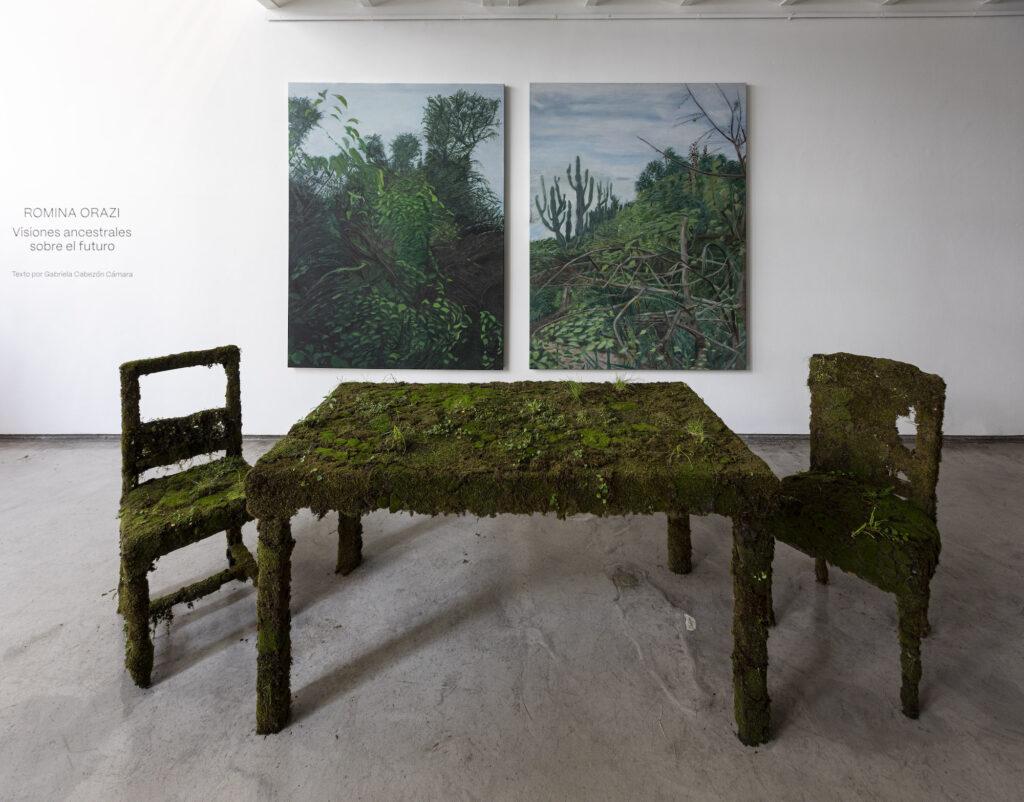
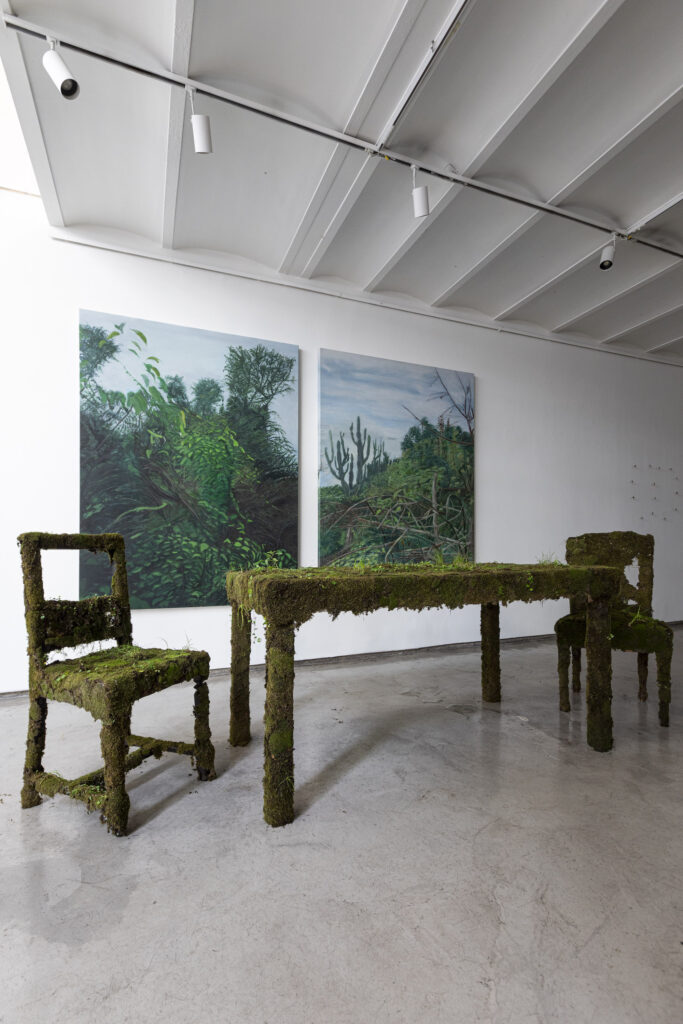
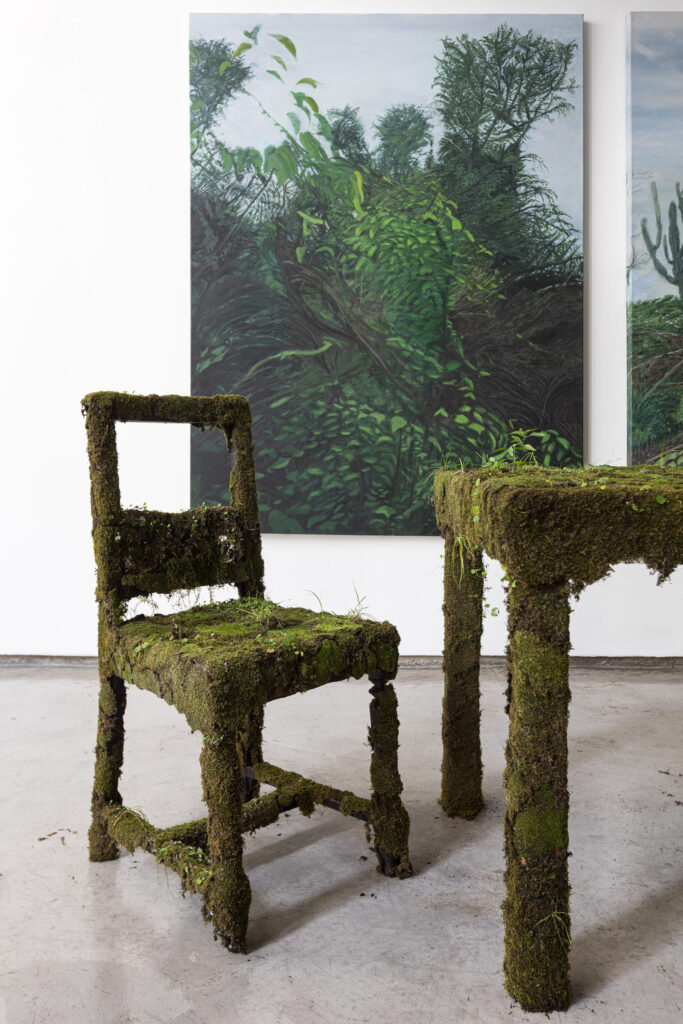
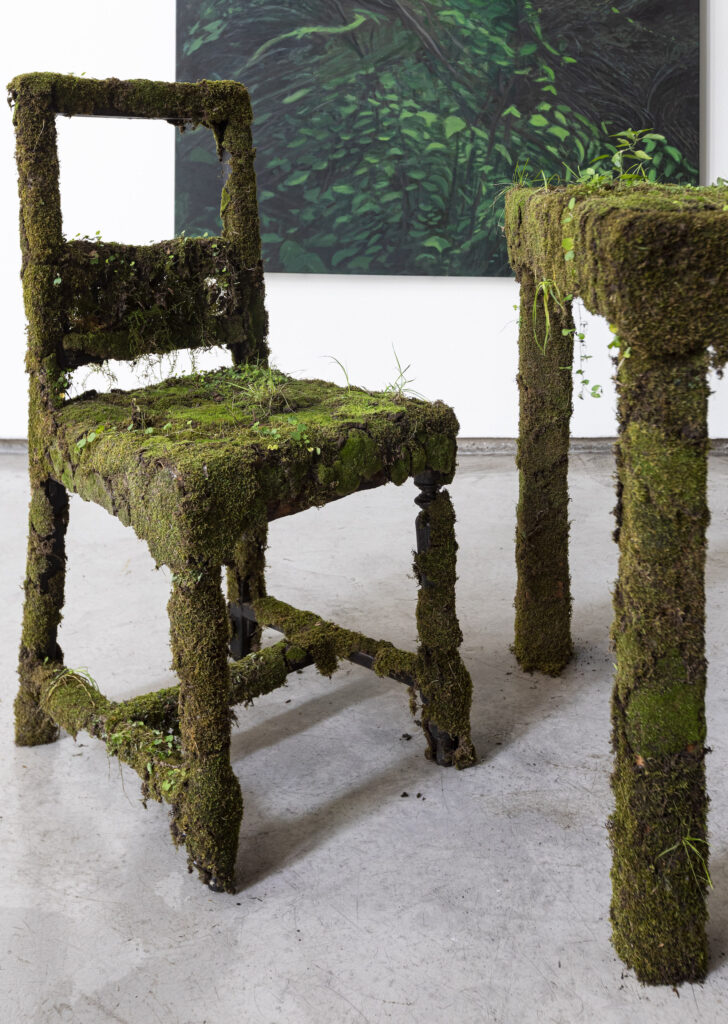
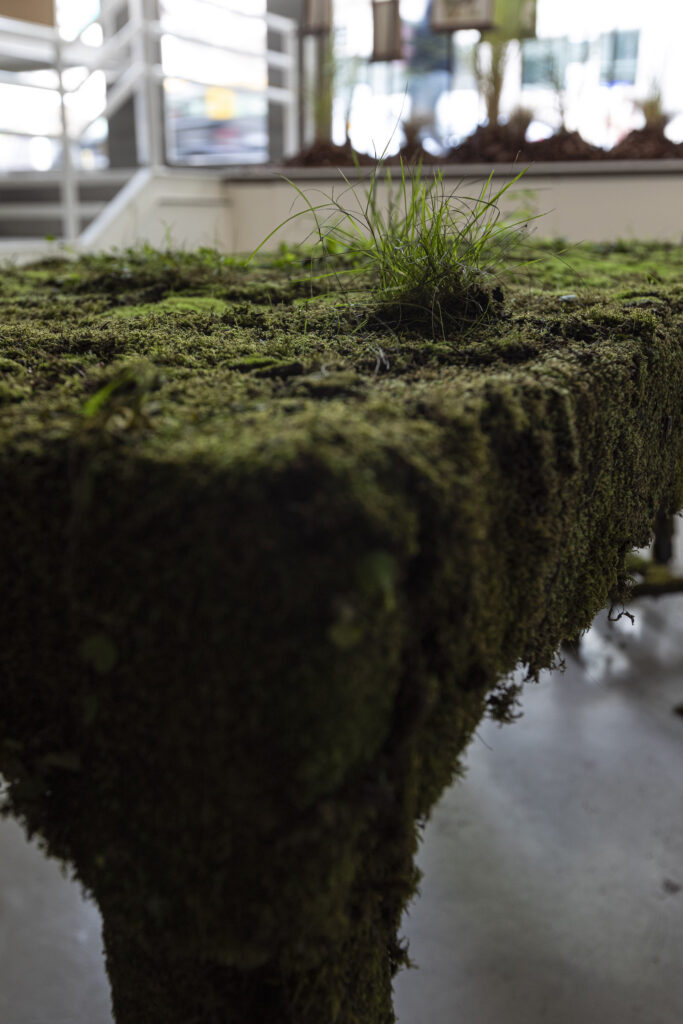
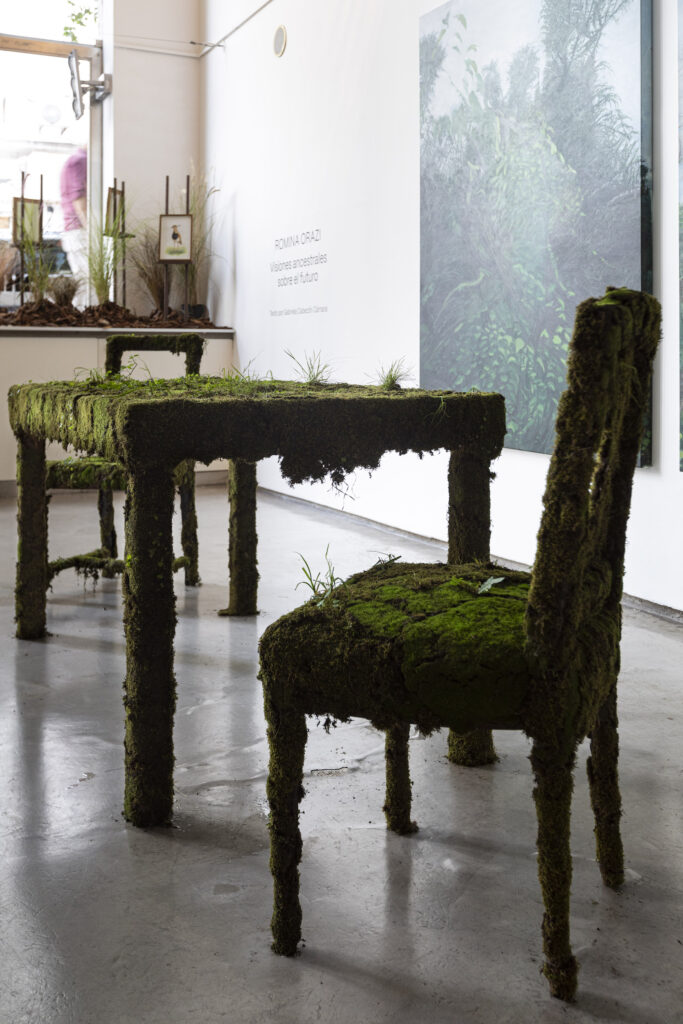
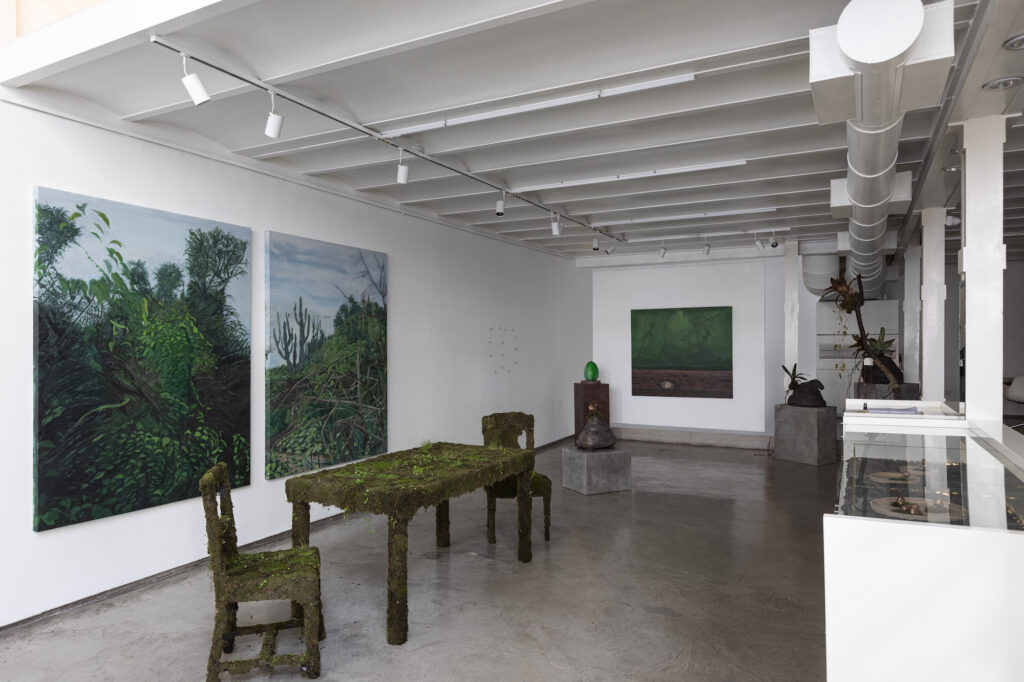
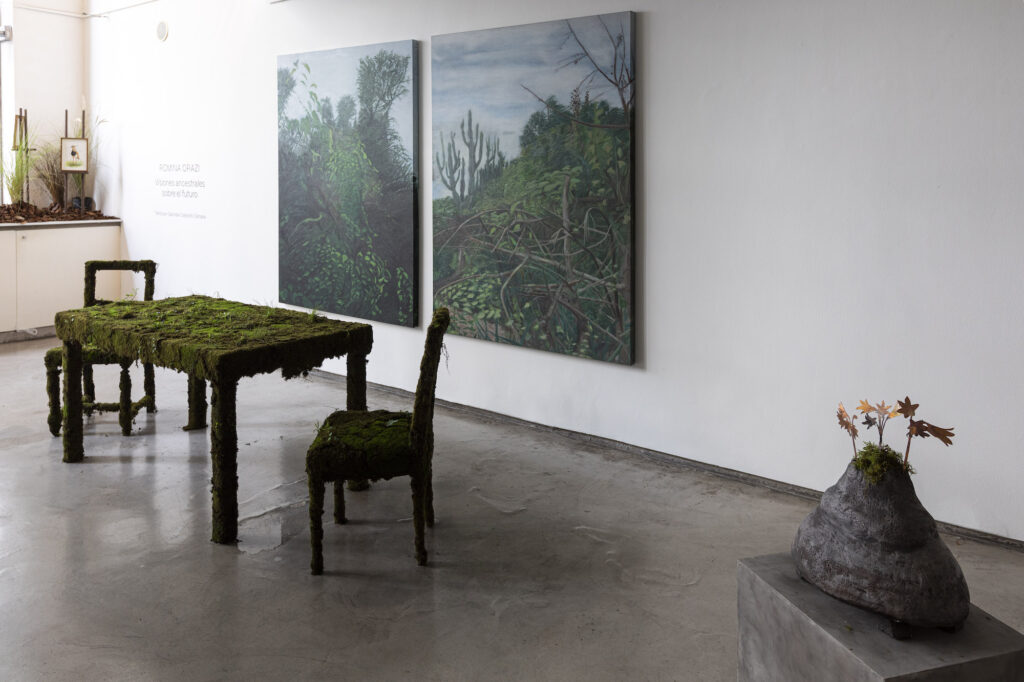
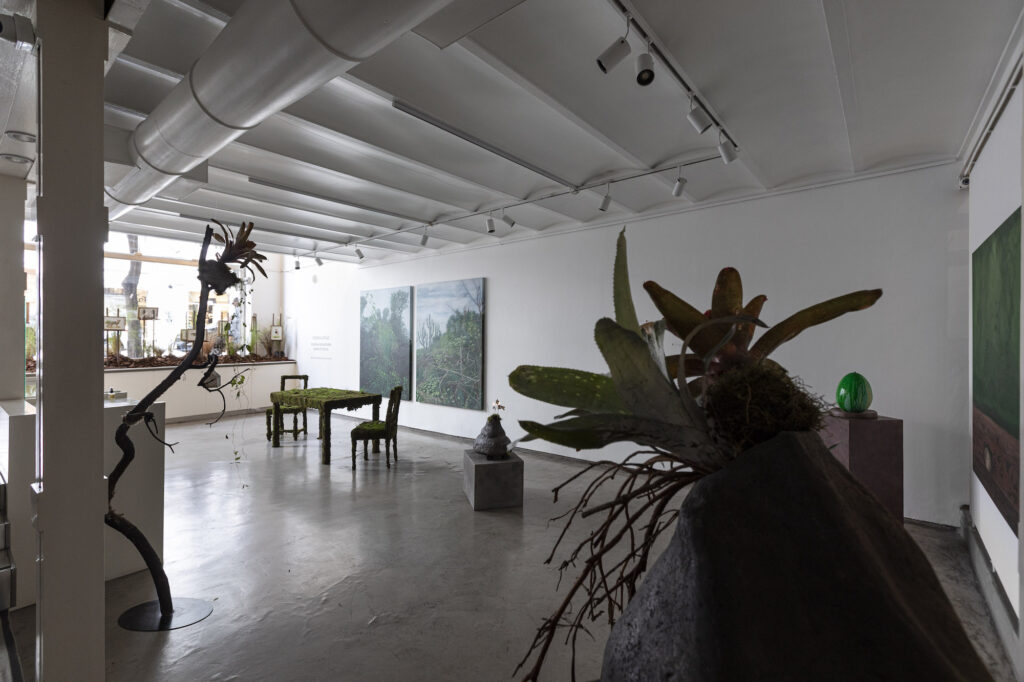
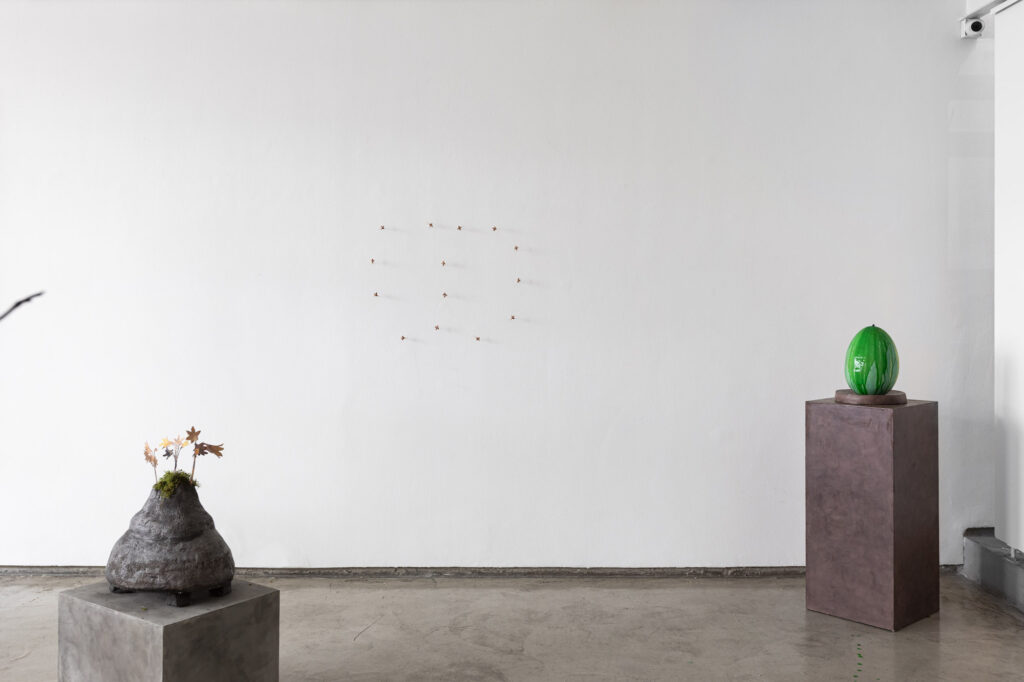
You can start with any piece, and for me, Double Landscape speaks first. It’s a green epiphany, a recognition of something we’ve forgotten: that the Earth knows, that it thinks, with a scale of thought inconceivable to us. But there it is, on a table, some chairs, returning to the wood some of its tree’s breath, its surrender to photosynthesis, to the creation of worlds. Because that’s what the Earth does: beings that, with only light and water—a little soil helps too, but remember that soil is both its matrix and its product—create what we call the biosphere, which weaves into its web all the life forms we know. Light, photosynthesis, water: it’s hard to find more sacred materials and processes. What could be more sacred than life itself, than the Earth’s determination in its ceaseless creation?
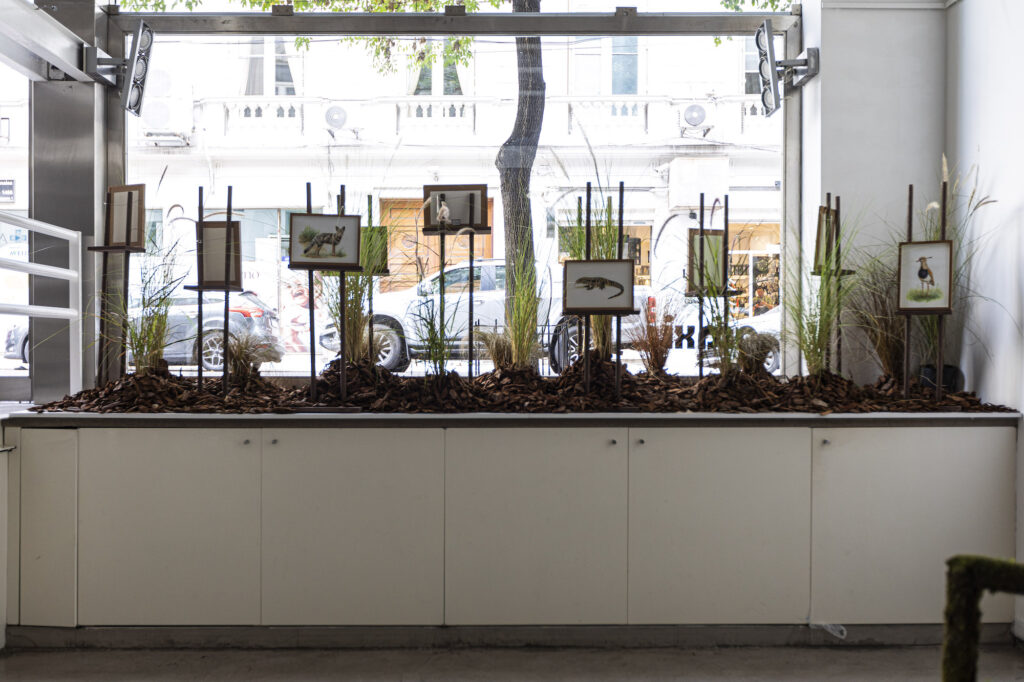
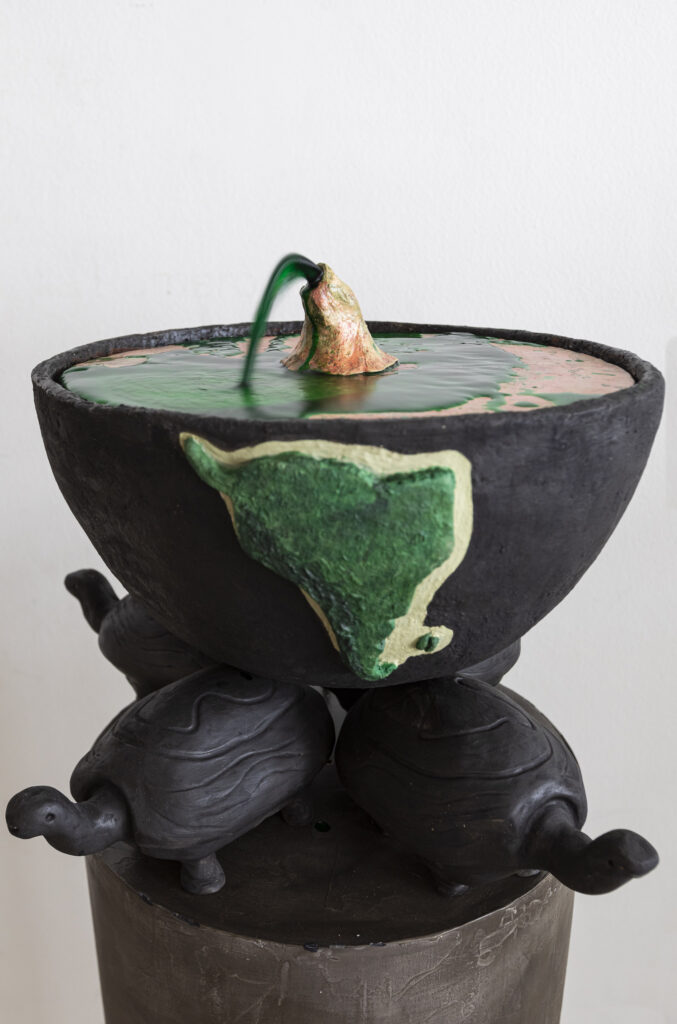
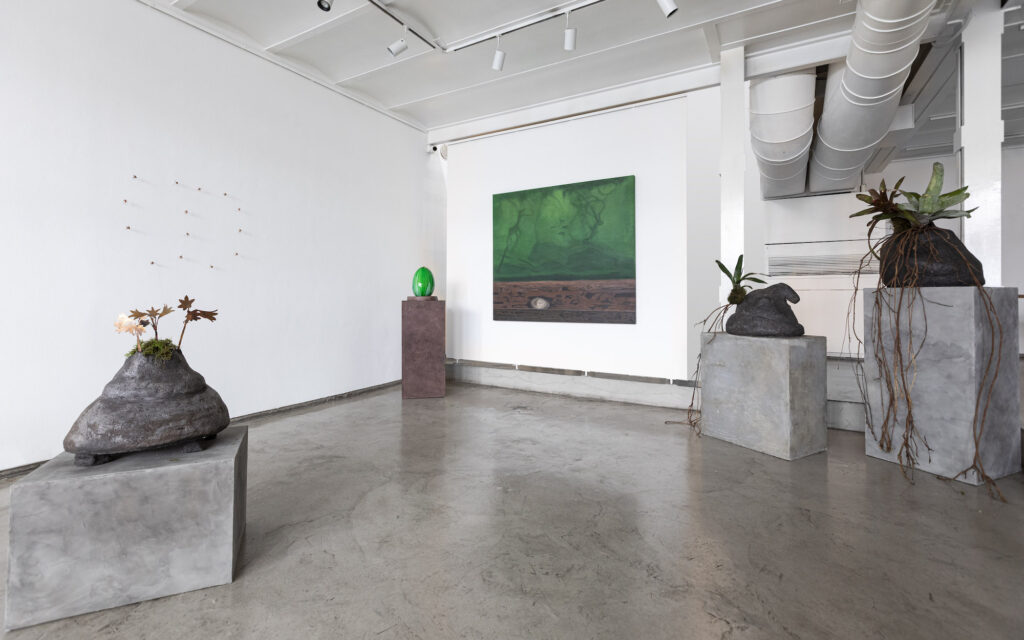
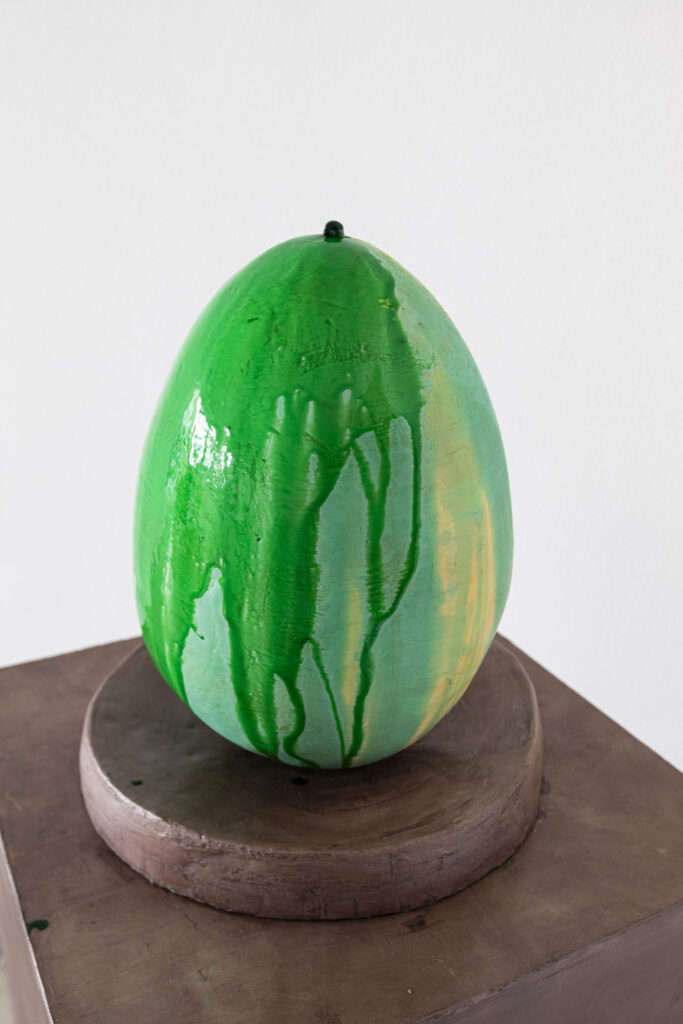
That which we forget, which we were and are forced to forget, is still there. In the moss that gives life back to the wood. In the forests that regrow even if it takes centuries. In the people who inhabit them and defend them against the entire death machine that dominates us and exterminates them first. In the flashes of recognition of something true, ancestral, that still beat within us and illuminate our body and soul when, for example, we see a jaguar with green fangs in a painting. In the egg that contains, we presume, some of the green water that, as if we had always known it even as we are discovering it in the artwork, acts as an amniotic fluid for the biosphere. In the drawings of the beings that inhabited, and in some cases still inhabit, these territories. This exhibition reminds me of something that the Indigenous thinker Airton Krenak, among others, speaks of: they, the Amerindians, dream of the river and the mountain, which also dream of them. In those dreams, they grasp the river’s perspective. There is communication there. We, those shaped by the West, no longer know how to dream like that. We were severed from the web of life. Art is, perhaps, one of the few practices that sometimes manages to re-establish that communication. This communication is ancestral. And it is one of our few possibilities for the future: to reconnect, to knot ourselves once more with that web, the web of life. There won’t be much left of us if we don’t do it soon. Artists like Romina Orazi call to us with their works. You look at them, you smell them, you listen to them. And you feel the truth that is there. You feel the beauty. We have a right to beauty, which is to say, to life. Somewhat in the way that Caístulo, the Wichí prophet-artist, says, who understands what the trees sing, translates it into the poetic function of his language, the sacred song, and then into Spanish and into a poem together with Dani Zelko. Thus Caistulo says, when speaking of the trees: “These are the mothers/they are the ones who share/with seeds/the life that never fails.”
Gabriela Cabezón Cámara
April 2026